Tiny Cabins for Rent: Find Picture-Perfect Stays on TinyHomeMap
21 min read · Updated October 27, 2026
By John
Introduction: Tiny Cabins for Rent in 2026
Whether you're craving a quiet weekend in the woods or planning a week-long mountain escape, tiny cabins for rent deliver nature immersion without the bulk of a traditional vacation home. This page helps you quickly discover and compare tiny cabin rentals worldwide using TinyHomeMap's interactive map and filters - from forest hideaways and lakeside retreats to off-grid desert boxes and design-forward architectural gems, most ranging from 150 to 400 square feet.
Below you'll find a visual, listicle-style guide showcasing 10 photogenic tiny cabin styles, plus practical breakdowns of cabin types, what to look for, and how to choose the right rental for your trip. TinyHomeMap is a directory: guests discover cabins here, then book directly with owners or platforms like Airbnb, VRBO, or Booking.com. Tiny home rentals are available in 17 states across the U.S., with settings spanning woods, mountains, lakes, beaches, and desert landscapes - so there's something for every traveler.
Types of Tiny Cabins for Rent
Not every tiny cabin is the same. The range breaks down into distinct "flavors" - each shaped by its setting, design, and the kind of trip it serves. Scan the types below to find what suits your group, whether you're after a romantic escape, a family adventure, or a digital detox in total silence.
Forest & Woodland Tiny Cabins
Forest tiny cabins are compact wood-built structures nestled under pines, redwoods, or mixed canopy, often on private parcels of one to five acres. They're ideal for couples or solo travelers who want quiet hiking, campfire evenings, and wildlife views right from the deck.
Typical features include large windows framing the trees, wood stoves, hammocks, outdoor fire pit areas, and sometimes an outdoor shower tucked behind the cabin. Many tiny cabins feature large windows designed to bring natural light inside, blurring the line between interior comfort and the forest beyond.
Popular regions for forest tiny cabins include the Pacific Northwest (Oregon and Washington), Northern California, Vermont, British Columbia, and the Black Forest area in Germany. Mount Hood Tiny House Village, for instance, features dog-friendly accommodations for those who want to explore mossy trails with their pets.
Lakeside & Riverfront Tiny Cabins
Lakeside and riverfront tiny cabins sit directly on or near the shoreline, often with private docks or easy water access for kayaking, paddleboarding, or fishing. These rentals are a perfect place for sunrise coffee on the dock, autumn foliage reflections, or lazy summer afternoons by the water.
Amenities typically include decks facing the water, firepits by the shore, and small saunas or hot tub setups for cold-climate rentals. A riverside tiny house in Johnson, Vermont includes a hot tub and mountain views - a combination that turns a simple cabin stay into a deeply restorative peaceful getaway.
Popular destinations include the Lake Superior North Shore in Minnesota, the Adirondacks and Catskills in New York, the Lake District in the United Kingdom, and Nordic lake regions across Scandinavia.
Mountain-View & Ski-Town Tiny Cabins
Mountain tiny cabins offer wide views of peaks or ski areas, often located near trailheads or resort towns. They're built for hikers, skiers, snowboarders, and trail runners who want a warm, compact base after long days outside. The Powderhorn Ski Resort even offers tiny home rentals with ski slope access for guests who want to maximize time on the mountain.
Typical features include gear storage, mudroom-style entries, strong heating, hot tubs, saunas, EV chargers, and free wifi for remote workers blending a workcation with mountain adventure. Well-known mountain regions include the Colorado Rockies, the Great Smoky Mountains, Swiss Alps, and the Dolomites. Colorado has a resort of tiny homes in Lyons that serves as a base for exploring Rocky Mountain National Park and nearby trails.
Off-Grid & Eco Tiny Cabins
Off-grid tiny cabins run on solar power, rainwater catchment, and composting toilets, with minimal light pollution and near-zero grid connection. Many tiny cabin rentals prioritize eco-friendly features and sustainable design, and tiny homes can include off-grid capabilities to promote reliance on renewable energy.
These rentals attract guests seeking digital detox, stargazing, sustainability-focused vacations, and low-impact stays. Many tiny cabins are designed to encourage digital detox by minimizing technology - no TV, sometimes no cell coverage, just the sound of wind and dark skies overhead. Expect some compromises: limited plug load, careful water use, and self-sufficiency with supplies.
Popular regions include the high desert around Joshua Tree (where tiny homes with hot tubs are available), the Scandinavian countryside, rural New Zealand, and the Canadian Shield. Tiny cabins offer an alternative housing solution for various lifestyles, and off-grid models represent the most committed version of that philosophy.
Design-Forward & Luxury Tiny Cabins
Architect-designed, magazine-worthy tiny cabins feature premium interiors, dramatic glazing, and hotel-level bedding. High-end tiny cabins maximize space efficiency through multi-functional architecture - custom millwork, built-in storage, convertible furniture - all wrapped in striking exterior forms like A-frames, mirror cabins, or cantilevered glass boxes.
They're for couples celebrating anniversaries, creatives seeking inspiration, and travelers who value aesthetics as much as setting. According to 2026 glamping market data, mirror cabins and other architecturally distinctive structures command top nightly rates - averaging around $458 per night. On TinyHomeMap, visitors can filter for "design-forward" and "luxury" tags to surface this collection of standout cabins.
Family-Friendly & Pet-Friendly Tiny Cabins
Family-friendly tiny cabins are optimized for kids and pets: bunk beds, fenced yards, shared play areas, and easy access to gentle trails and lakes. Common layouts include one bedroom plus a loft, convertible sofa, and ladder or staircase access designed with safety in mind. Tiny cabins use clever design to enhance guest comfort in small spaces, which matters even more when kids are involved.
TinyHomeMap filters let users select "pet-friendly" or "sleeps 4+" to surface these listings. Regions with strong family-friendly inventories include the Poconos, Great Smoky Mountains (where you can visit attractions like the Great Smoky Mountains Railroad), New England, and Bavarian-style towns in Washington State like Leavenworth. Leavenworth Tiny House Village has five themed tiny homes that make for an especially memorable family trip.
10 Eye-Catching Tiny Cabins for Rent (With Photo Ideas)
This listicle showcases 10 highly photogenic tiny cabin styles - each with a specific setting, vibe, and architectural photo brief. All images should be high-resolution, architectural, HDR, and captured in a tiny-cabin aesthetic that emphasizes the interplay between compact design and dramatic landscape.
1. Glass-Front Forest Cabin in Oregon's Mossy Pines
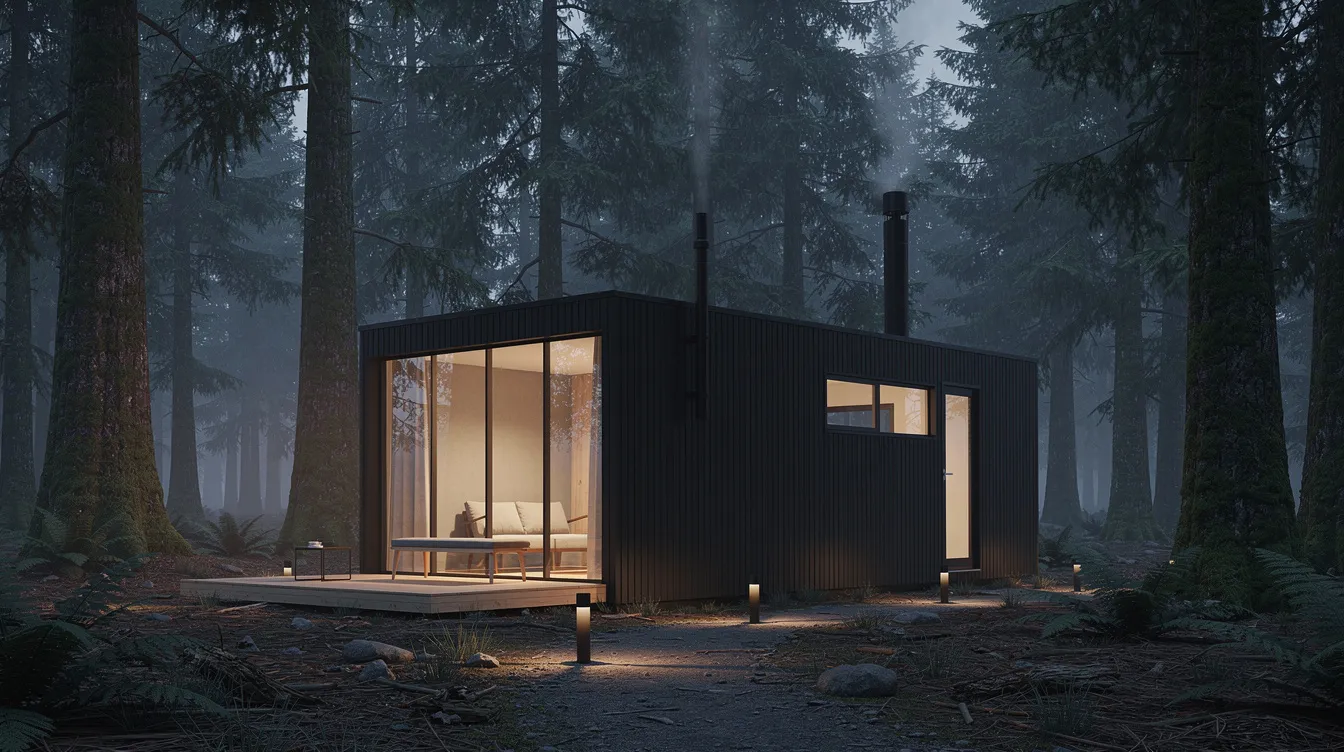
This 260 sq ft black-clad cabin near Mount Hood, Oregon, disappears into the mossy Douglas-fir canopy until evening, when its full-height glass wall glows like a lantern among the pines. The design is deliberately restrained - a slender wood deck, minimal outdoor furniture, a narrow chimney - letting the forest do the visual work.
Inside, the cozy tiny house packs a queen bed loft, a compact rain shower, and a wood stove that fills the room with warmth on damp Pacific Northwest evenings. Tiny cabin rentals often include amenities like private decks and fire pits, and this one delivers both in an understated package.
Wood stove for quiet evening warmth
Queen bed loft with forest canopy views
Rain shower with skylight
Private deck with two Adirondack chairs
2. Scandinavian-Style Lake Cabin in Finland
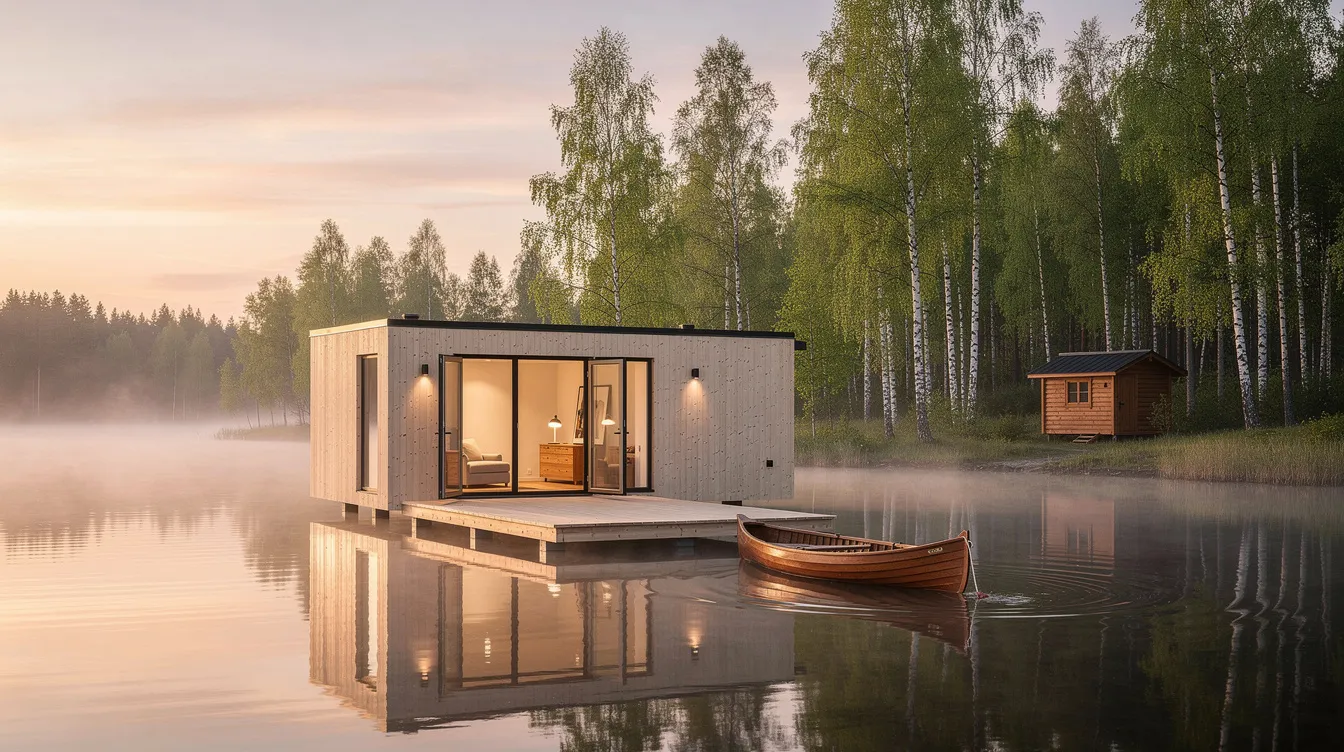
This 220 sq ft pale timber cabin in Eastern Finland sits just meters from a glassy lake, its metal roof catching the first pink light of a Nordic morning. Glass doors fold open onto a narrow dock where a canoe waits - the only sound is birdsong and the occasional fish breaking the surface.
The composition is pure Scandinavian restraint: an integrated bench on the deck, a tidy firewood stack under the eaves, and a cedar sauna hut visible in the background. This is the kind of peaceful escape where the biggest decision of the morning is whether to paddle the lake or sit on the dock with a coffee maker brew and watch the fog burn off. Tiny cabin communities often appeal to a global audience interested in simpler living, and few places embody that spirit more clearly than the Finnish lakeside.
3. Desert Tiny Cabin Near Joshua Tree National Park

Rust-colored corrugated steel siding gives this 200 sq ft Mojave cabin a raw, sculptural presence among the boulders and Joshua trees. At golden hour, the sky shifts from deep indigo to burning orange behind the cabin, while string lights over a stock-tank "cowboy pool" invite guests to cool off under a canopy of stars.
Inside: polished plywood walls, a clean minimalist bed with linen duvet, a built-in bench, and a single large window that frames the desert like a painting. Tiny homes with hot tubs are available in Joshua Tree, California, and this property adds the cowboy pool for a distinctly desert-luxe touch. Travelers seek tiny cabins near national parks and scenic outdoor areas, and Joshua Tree delivers some of the most dramatic landscapes in the world for that purpose.
4. A-Frame Tiny Cabin in the Vermont Snow
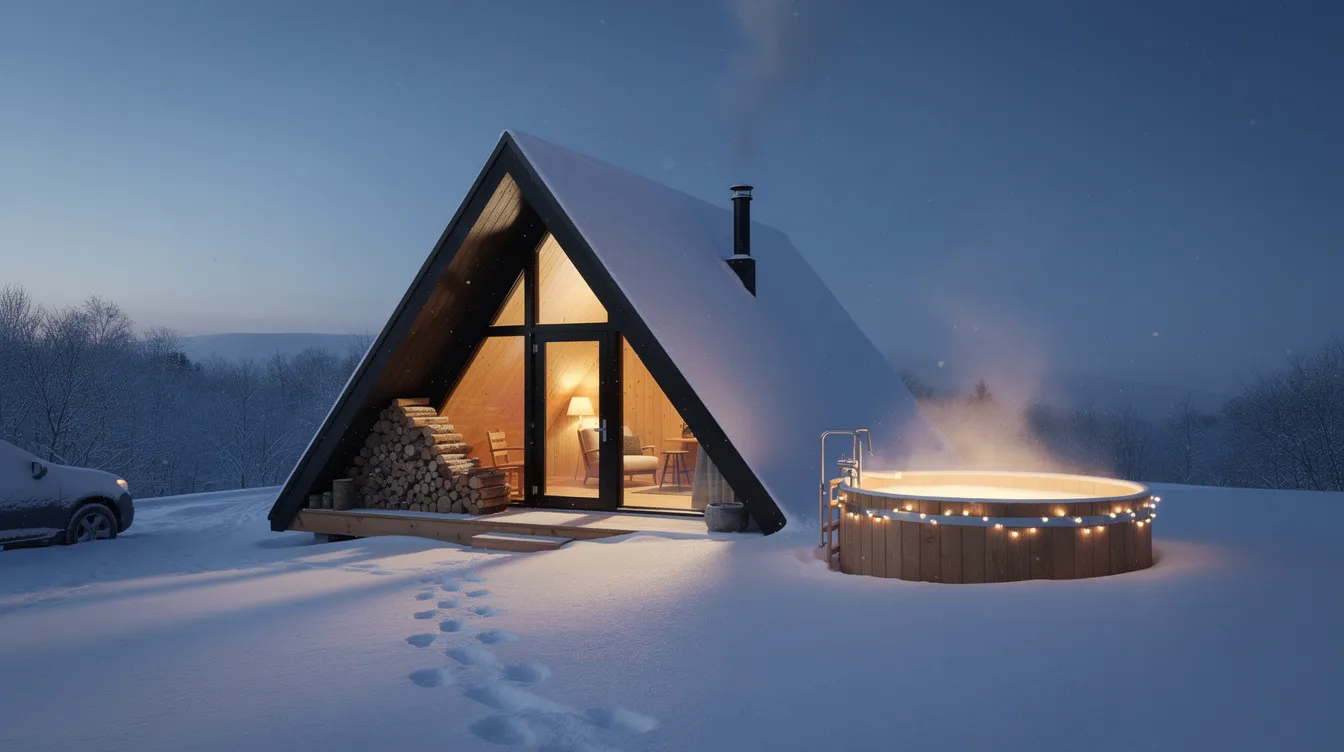
This 230 sq ft black A-frame near Stowe, Vermont, becomes a striking silhouette against fresh powder - black siding, white snow, and golden light pouring from the triangular window. Smoke curls from the chimney, and a nearby hot tub sends steam into the cold evening air alongside fairy lights.
The contrast is what makes this cabin unforgettable: the sharp geometry of the A-frame against the soft chaos of falling snow, the warmth inside versus the quiet cold outside. Vermont's winter cabins reward guests who pack layers and slippers and settle in for an evening by the fire. Tuxbury Tiny House Village, which opened in 2010 in nearby New Hampshire, helped pioneer the New England tiny cabin scene that now extends across the region.
5. Cliffside Tiny Cabin Overlooking Colorado's San Juan Mountains
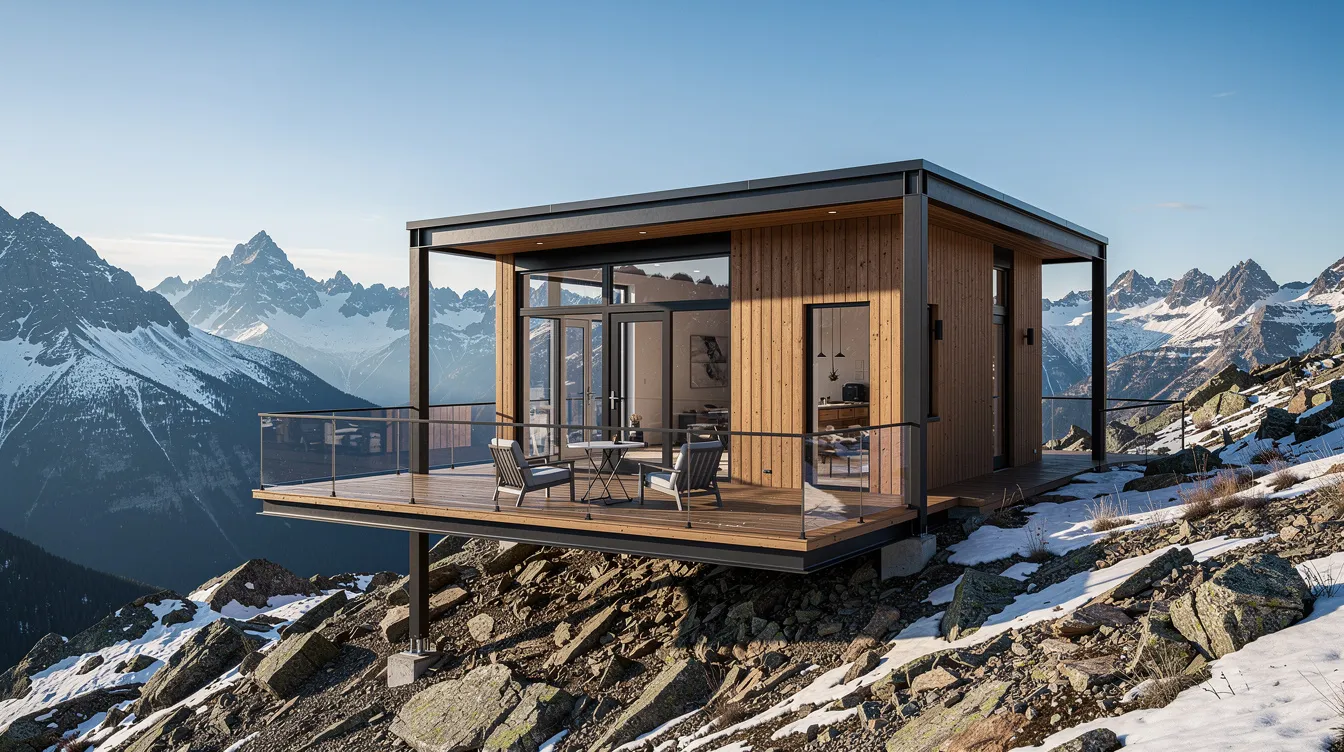
Cantilevered over a rocky slope near Ouray, Colorado, this 300 sq ft timber-and-steel cabin puts the San Juan peaks directly at eye level. A glass-railed wrap-around deck with two chairs and a bistro table creates a perch that feels almost airborne - crisp mountain air, extreme clarity in distant ridgelines, and nothing between you and the view.
Inside, the bed aligns with the glass doors so that the first thing you see each morning is snow-capped peaks. Colorado has a resort of tiny homes in Lyons, but the mountain views from a cliffside cabin near Ouray are in a category of their own. This is where adventure seekers can enjoy hiking to ice-climbing routes and hot springs by day, then return to a warm room with panoramic exposure at evening.
6. Riverbank Tiny Log Cabin in North Georgia
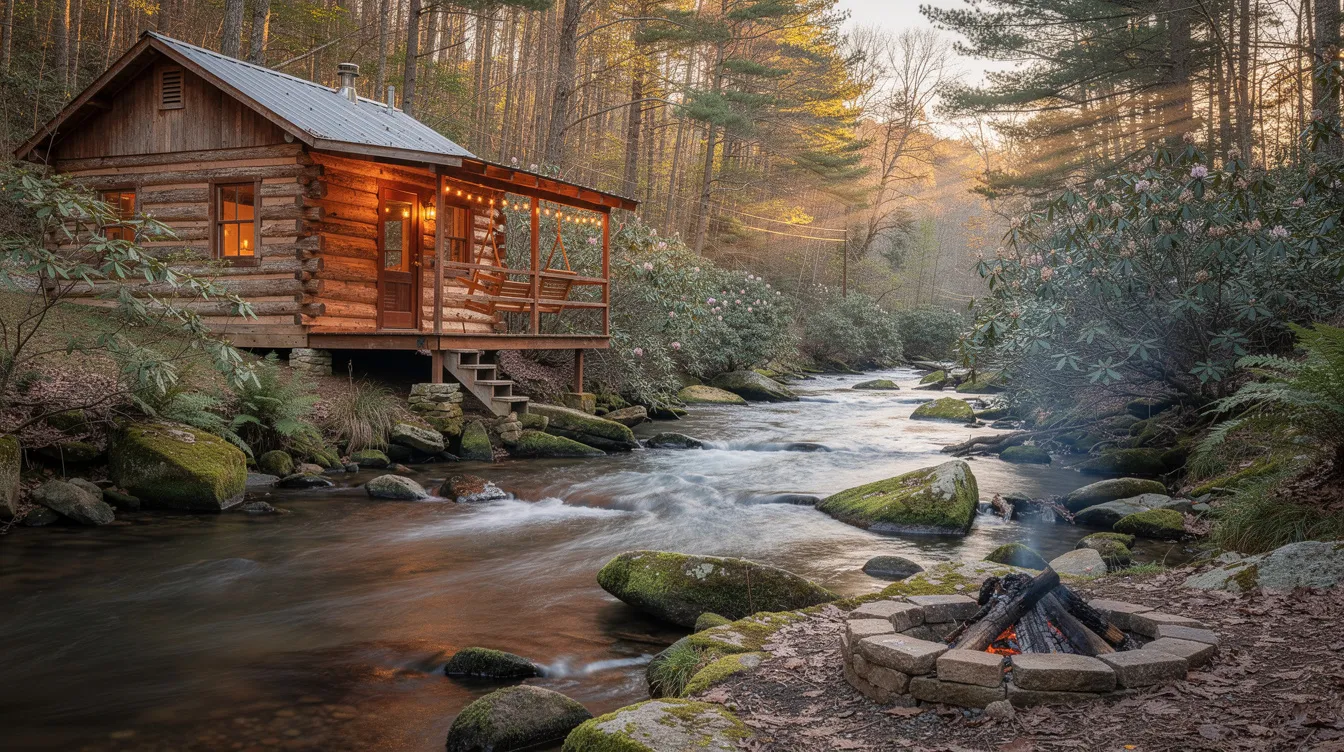
Hand-scribed logs, a covered porch with a hanging swing, and a shallow river curving beneath mossy rocks - this 210 sq ft cabin near Clayton, Georgia, delivers Southern Appalachian charm at its most photogenic. A long-exposure shot at golden hour turns the river water silky, while string lights along the deck railing glow against the darkening rhododendron and hemlock forest.
Georgia features the Little Red Roof tiny house in Clayton, and this log cabin shares the same lush mountain setting. Down by the bank, a stone fire ring invites evening s'mores, and the sound of moving water replaces the noise of everyday life. This is a beautiful home for couples or friends seeking a quiet weekend of fishing, creek-wading, and porch-sitting.
7. Contemporary Tiny Cabin in a Japanese Cedar Forest
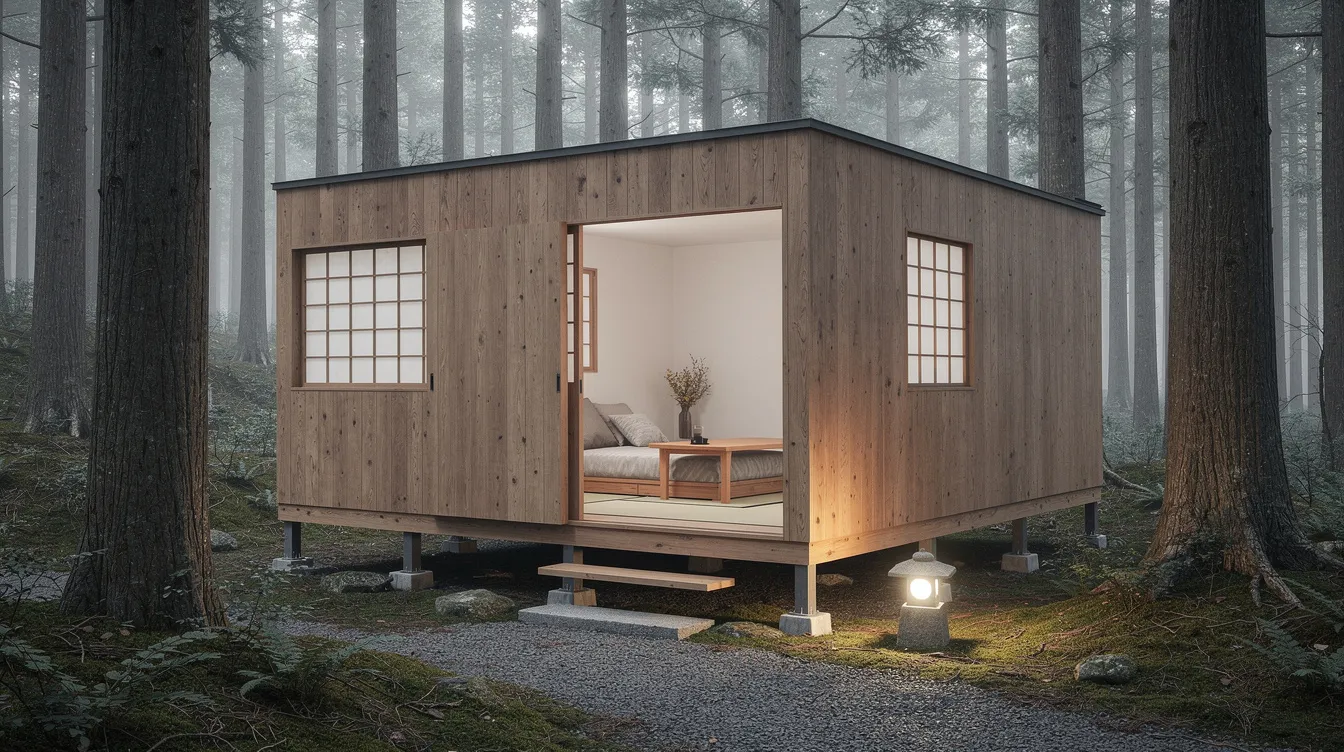
This minimalist cedar-clad cabin near Nagano floats on piers among towering sugi trees, its clean lines and shoji-inspired windows echoing Japanese architectural tradition. Overcast light diffuses through the canopy, casting even, shadow-free illumination on the cabin's precise geometry - a gravel path and single stone lantern the only embellishments.
Through an open sliding door, a tatami-inspired platform bed and low table are visible - nothing more, nothing less. Tiny cabins use clever design to enhance guest comfort in small spaces, and Japanese minimalism takes that principle to its most refined expression. The soft color palette of cedar, gray, and green creates a visual quiet that matches the forest silence outside.
8. Shipping-Container Tiny Cabin Above an Australian Vineyard
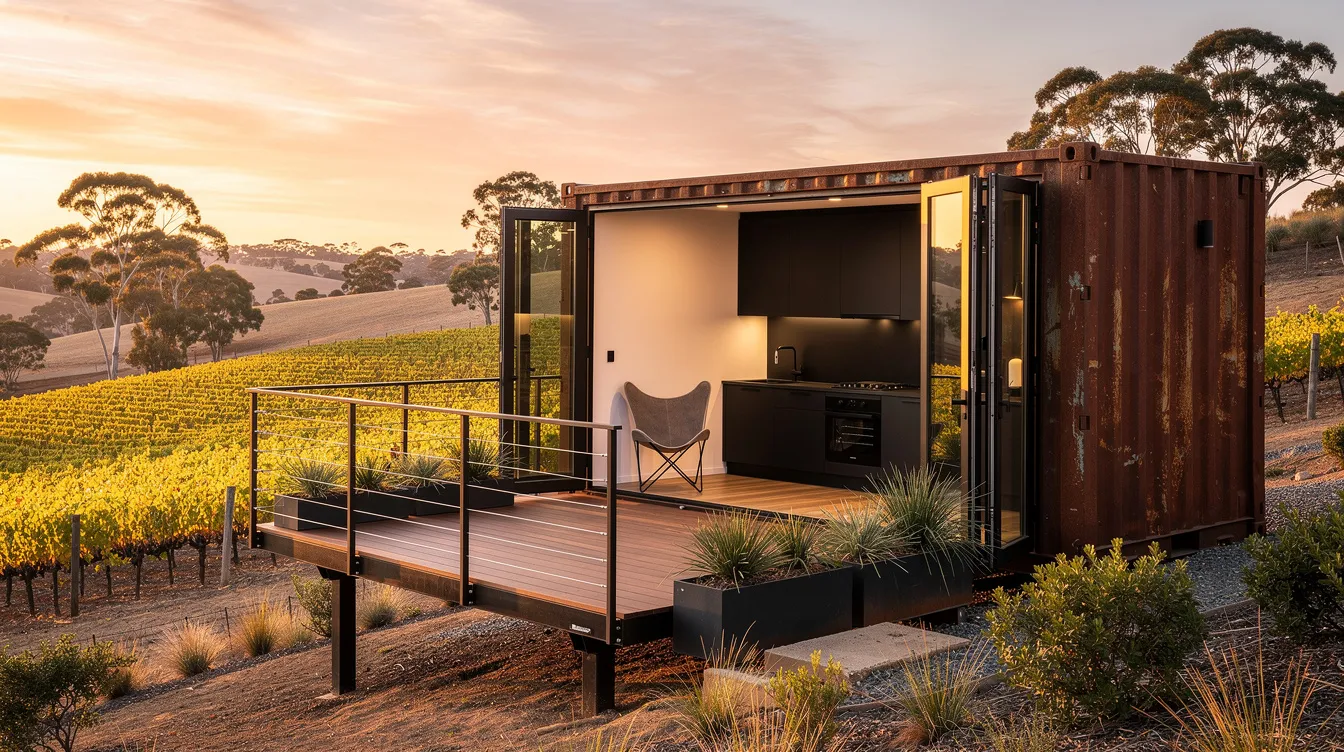
A converted 20-foot shipping container perched on a hillside above vineyard rows - at sunset, the corten rust patina blends into the golden light while the bi-fold doors open the entire interior onto a small deck. Cable railing and metal planters with native grasses keep the industrial-meets-rural aesthetic honest and unfussy.
Inside: a single sculptural chair, a small wood-burning stove, and a compact full kitchen with matte black finishes. This is a cabin for wine-country weekends - visit the vineyard in the morning, explore a nearby town for lunch and a coffee shop stop, then return to your container perch for an evening glass watching the light move across the valley. Tiny cabin rentals are popular for minimalist nature retreats, and this one swaps forest for vineyard without losing the spirit.
9. Coastal Tiny Cabin on the Maine Shoreline
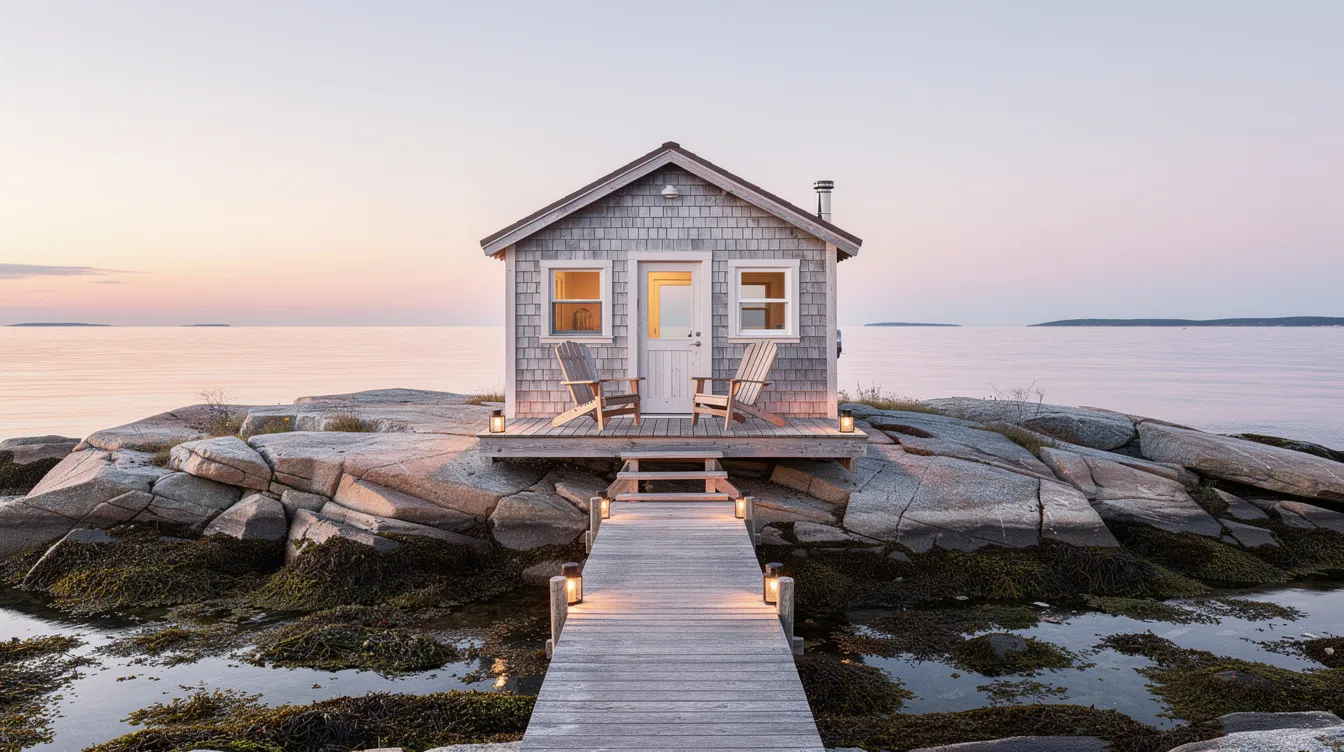
Silver-shingled by decades of salt air, this 280 sq ft cabin perches on granite outcropping near Bar Harbor, Maine, with nothing between its deck and the Atlantic horizon. At early morning, the sky turns soft pink, seaweed-covered rocks frame the foreground, and the only sound is gulls and the rhythmic wash of the coast.
A weathered boardwalk and small lanterns on the steps complete the approach. This is where you relax with the window cracked to the ocean breeze, where the bathroom mirror shows a face already less stressed than the one that arrived. Tiny homes can be found in locations offering diverse settings like woods, mountains, and lakes - but the Maine coast adds a fourth dimension of salt, wind, and tidal rhythm that's hard to replicate anywhere else in the world.
10. Tiny Cabin Cluster in a Shared Retreat in Portugal

Four whitewashed tiny cabins (190–230 sq ft each) arranged around a shared plunge pool in rural Alentejo, Portugal - this micro-resort balances private rooms with communal gathering. An outdoor kitchen, central fire bowl, and shared deck create a site where friends or extended family can cook, eat, and talk under olive trees without crowding into a single house.
Each cabin maintains its own entrance, bathroom, and small garden terrace for privacy. Tiny cabin communities often appeal to a global audience interested in simpler living, and this cluster format - part retreat, part tiny village - represents an increasingly popular model across southern Europe. From a ground-level secondary angle, one cabin fills the frame while the others hint at the broader community in the background, maintaining the intimate "tiny" feeling.
What to Look For in Tiny Cabins for Rent
Inspiring photos get you dreaming, but practical criteria get you into the right cabin. This section turns visual appeal into concrete comparison points you can use when filtering listings on TinyHomeMap.
Size, Layout & Sleeping Arrangements
Tiny cabins typically range from 150 to 400 square feet in size, though some tiny homes range from 152 sq ft to 700 sq ft at the larger end. That square footage feels very different depending on layout:
Loft beds maximize floor space but require ladder climbing - great for agile couples, less ideal for young kids or guests with mobility concerns.
Main-floor queen beds are more accessible but reduce living area; look for fold-away or Murphy bed options.
Bunk beds and convertible sofas extend capacity to 3–4 guests; check whether the cabin sleeps 2 or offers additional sleeping spots.
Ceiling height matters: taller guests should look for minimum loft clearance of at least 42 inches and full-length beds (80 inches).
Always check floor plans, photos, and maximum occupancy on TinyHomeMap-linked listings before booking.
Location, Setting & Access
The difference between a remote off-grid cabin down a gravel road and an easy-access cabin near a ski town reshapes your entire trip:
Drive time: Check distance from nearest airport or city. Some best tiny cabins are a short drive from amenities; others require hours on unpaved roads.
Winter access: Mountain and forest cabins may require snow chains, 4x4, or seasonal road closures - confirm with the host.
Setting shapes activities: Forest means hiking and campfires; lakefront means fishing and paddleboarding; desert means stargazing and morning hikes before the heat.
TinyHomeMap's map view lets you zoom and layer filters (waterfront, mountains, forest) to pinpoint the right location. Look for cabins nearby state park land or national park boundaries for maximum trail access.
Essential Amenities & Comfort Features
Tiny cabin rentals often include amenities like private decks and fire pits, but the range of extras varies widely:
Basics: Reliable heating/cooling, hot shower, kitchen or kitchenette, comfortable mattress, blackout blinds.
Popular upgrades: Hot tub, sauna, fire pit, EV charger, fast Wi-Fi (or free wifi), dedicated workspace, coffee maker.
Pet amenities: Dog wash stations, fenced yards, pet beds - filter for these on TinyHomeMap if traveling with pets.
Prioritize 2–3 "must-haves" and filter for them rather than chasing every possible perk. A cabin with a heated pool and mini golf nearby may matter more to a family than luxury bedding.
Utilities: On-Grid vs Off-Grid Realities
On-grid cabins offer standard plumbing, unlimited power, and familiar bathroom fixtures. Off-grid cabins trade those for solar panels, limited water reserves, and composting toilets - a meaningful difference:
Composting toilets work well when maintained; most guests report them as odorless and simple after the first use.
Solar power means watching plug load: charge devices during daylight, skip the hair dryer, and don't expect to run a space heater all night.
Water conservation: Rainwater or trucked-in water systems often limit long showers. Check listing descriptions and respect usage limits.
The trade-off is real: silence, dark skies, and zero distractions from nature. For many guests, that's the good stuff.
Seasonality, Weather & Insulation
Tiny cabins heat up and cool down quickly because of their compact volume - which makes insulation and HVAC quality critical:
Winter stays: Look for well-insulated walls, double-glazed windows, wood stoves, and sealed doors. Patriots Tiny Home in Sevierville has a hot tub and fire pit that make cold-weather stays genuinely comfortable. Tiny homes near Dollywood offer hot tubs for relaxation during Tennessee's chilly shoulder seasons.
Summer stays: Shaded forest or lakeside cabins with cross-ventilation or AC stay livable; desert cabins without cooling can be brutal.
Check seasonal reviews and photos: Is the cabin cozy in January in Colorado, or cool enough in August in Texas?
Pack layers, slippers, and outdoor gear for shoulder seasons or snow climates.
Safety, Privacy & Regulations
Before booking, verify practical safety and privacy details:
Safety basics: Smoke and CO detectors, secure railings on decks, stable ladder or staircase access, clear emergency instructions and nearest hospital location.
Privacy: Distance to nearest cabin or other guests, shared vs private hot tub, curtains or blinds on large windows, tree coverage.
Regulations: TinyHomeMap reviews submissions to avoid obvious zoning or safety red flags, but travelers should still read house rules and local guidelines. Many jurisdictions treat permanent cabins like regular buildings requiring full permits.
How to Choose the Right Tiny Cabin Rental
All the features above condense into a few core decisions. Use these criteria to narrow your search quickly:
Trip purpose (romantic, family, workcation, adventure) - Romantic stays lean toward secluded, design-forward cabins with a hot tub; families benefit from slightly larger footprints and outdoor play space near gentle trails; workcations require reliable Wi-Fi and a desk; adventure trips prioritize trail or ski access. Tennessee offers tiny homes near Dollywood and Ruby Falls for family-friendly adventures, while Arizona features tiny homes near the Grand Canyon for explorers.
Group size & mobility needs - Solo travelers and agile couples can handle lofts and ladders. Groups of 3–4 or anyone with limited mobility should filter for main-floor beds and no-step entries. WeeCasa Tiny Home Resort has multiple tiny homes with private entrances, offering an accessible option for varied groups.
Desired remoteness vs convenience - Truly remote cabins deliver silence and stars but demand more driving and self-sufficiency. Cabins near towns trade solitude for easy dining, groceries, and medical care. Tiny House Siesta is located about 1 mile from Siesta Key Beach in Florida, offering beach access without full isolation - an easy walk to a coffee shop or restaurant.
Budget vs wow-factor - Ultra-photogenic architectural cabins and premium hot-tub spots command $200–$400+ per night. Budget-friendly options in many regions run $70–$150 per night. Save with shoulder-season dates, weekday stays, or simpler interiors. Tiny homes in Fredericksburg, Texas feature a hot tub and cowboy pool at competitive rates.
Season & climate - Match cabin design to season: well-insulated wood-stove cabins for winter in Wisconsin or Vermont; shaded or breezy lakeside cabins with AC for summer. The U.S. glamping market is growing at roughly 12.6% CAGR to 2030, so booking early - especially for peak weekends - is increasingly important.
Booking platform & house rules - TinyHomeMap links out to hosts or platforms. Check cancellation policies, pet rules, quiet hours, and cleaning expectations before confirming. Some cabins restrict sign-in times or limit the number of guests; reading the fine print avoids surprises on arrival.
Frequently Asked Questions About Tiny Cabins for Rent
These FAQs address the most common questions about space, costs, booking, and what staying in a tiny cabin actually feels like.
Are tiny cabins big enough for a comfortable stay?
Tiny cabins typically range from 150 to 400 square feet, which is compact but deliberately designed. Smart layouts - lofts, built-in storage, multi-use furniture - make them feel substantially larger than bare square footage suggests. For a weekend, even a 150 sq ft cabin that sleeps 2 works beautifully for a couple. For a week-long stay or a family of four, look for 300+ sq ft with a loft plus main-floor sleeping and a full kitchen. Always inspect floor plans, photos, and reviews on TinyHomeMap-linked listings to gauge real-world comfort.
How much does it cost to rent a tiny cabin?
In 2026, budget rural cabins in the U.S. start around $70–$130 per night, while design-forward hot-tub cabins in prime scenic locations typically run $180–$400+ per night. Median nightly pricing for cabins across U.S. outdoor hospitality sits around $154.50. Destination (near national parks, ski resorts, or the beach), season, and amenities like a hot tub or sauna significantly affect price. Compare several cabins on TinyHomeMap for the same region and dates to see the local market spread.
What should I pack for a tiny cabin getaway?
Pack light and practical: weather-appropriate layers, sturdy footwear for hiking, personal toiletries, any specialty food or coffee, and a compact duffel instead of hard suitcases (storage space is limited). For off-grid cabins, bring headlamps, power banks, and any items the host specifically mentions - charcoal, firewood, or filtered water if not provided. Most cabins supply cookware, dishes, and linens, but confirm in the listing details before your trip.
Can I bring my dog to a tiny cabin rental?
Many tiny cabins welcome pets, but pet-friendliness is not universal. Always filter for "pet-friendly" on TinyHomeMap and double-check host rules before booking. Expect possible extra cleaning fees, leash requirements on the property, and restrictions on furniture access. Pack a blanket to protect seating, a travel crate if your dog uses one at home, and a towel for muddy paws. Mount Hood Tiny House Village features dog-friendly accommodations as a solid pet-friendly option in the Pacific Northwest.
What's the difference between a tiny cabin and a tiny house rental?
A tiny house can mean any small dwelling - often on wheels and sometimes in urban or suburban settings. A tiny cabin usually implies a small, fixed structure in a woodland or nature setting with cabin-style aesthetics: wood siding, a loft, proximity to trails or water. On TinyHomeMap, filters let users choose between cabins, wheeled tiny homes, park models, and off-grid structures. In practice, many guests use the terms interchangeably, but expectations for setting - forest vs urban - differ. Tiny homes are available in 17 states across the U.S., covering both cabin-style and wheeled options.
How do I find tiny cabins for rent near me?
Open TinyHomeMap, allow location access or type in your city, state, or country, then zoom the map and filter by "cabin," "for rent," and your desired price range. You can quickly scan map clusters around weekend-drive distances - say, 2–4 hours from home - for spontaneous trips. Save favorites and compare them by size, features, and setting before clicking through to book with the host. Search for specific areas like Lookout Mountain in Georgia or Key Largo in Florida to explore what's available in those destinations.
Start Browsing Tiny Cabins on TinyHomeMap
Tiny cabins for rent pack high-impact nature time into a small foot print - from off-grid desert boxes to lakeside saunas, from glass-front forest retreats to whitewashed Portuguese micro-resorts. Whatever your plan, there's a cabin shaped for it.
Open TinyHomeMap, toggle to "for rent," select "cabins" and your preferred region, and start exploring listings and photos. Shortlist 3–5 cabins that match your budget and vibe, then book early for peak weekends, holidays, or popular dates. Your next peaceful getaway is a search away.
Related articles
More guides that dig deeper into the same topics.
Ready to start searching?
Browse tiny homes, plans, builders, communities and land on the interactive map.
Explore the map